

In food manufacturing, most plants leave 15–30% of their potential capacity, quality, and profit on the table, not because of bad equipment or bad people but because of how work is designed, executed, and refined.
By Ozan Ozaskinli, Jordy Lemus, and Sercan Aldatmaz
1. Introduction
We are producing a series of articles titled Breaking the Misconceptions. This series addresses misconceptions that undermine manufacturing performance, exploring why they persist, how to identify them, the real challenges they pose, how they have been addressed in various setups, and practical hints to overcome them, thereby enabling plants to advance. We have organized the content across six dimensions: process, physical assets, people, governance, systems and KPIs, and planning. This article is the first in our series, following the introductory piece, and focuses on the misconceptions that limit process optimization, the false beliefs that weaken standards, increase variation, and quietly erode stability on the factory floor.
Across dozens of diagnostics across North America and Europe, we can say with confidence that most of the gap between average and world-class performance lies in how rigorously plants manage three interconnected disciplines.
Engineered Work is the deliberate design of every task, changeover, wash, batch transition, and daily routine so that it is as efficient, ergonomic, and error resistant as possible. Steps are eliminated or re-sequenced, motion is minimized, physical load is balanced, cognitive demand is reduced, and mistake-proofing is built directly into the workflow. The objective is straightforward: make the correct method the easiest method. When this discipline is strong, variability drops, capacity increases without additional labor or equipment, and the entire process becomes inherently stable.
Knowledge Flow & Execution Fidelity is the human bridge that turns design into reality. It begins with visual, concise and accessible at the point of use. They must be the right version at the right station in a format that survives water, gloves, and haste. But documentation alone is never enough. Execution becomes reliable only when operators understand the why behind each step and when the standard clearly makes their job easier, safer, and more predictable. When these conditions are met, the standard stops being something management enforces and becomes something the team naturally defends. Shortcuts fade because they no longer make sense.
Performance Visibility & Refinement is the feedback system that keeps the first two disciplines alive and improving. Real-time indicators are captured at the point of work and reviewed frequently, creating clear feedback loops that allow rapid adjustments as conditions change. Refinement then handles the inevitable shifts in product mix, equipment upgrades, recipe tweaks, seasonal variation, and regulatory updates without drama. Because the foundation is solid, updates propagate quickly: test, standardize, train, done. The system evolves continuously without ever feeling like a project.
When these three disciplines are strong and in balance, the results are predictable: changeovers routinely cut in half, off-spec waste down 20–35%, unplanned downtime down 25–40%, and a plant that runs the same regardless of who is on shift.
But when any one discipline weakens, and in most plants, this begins with the human bridge, the system enters the opposite cycle. SOPs fall behind reality, tribal knowledge fills the gaps, managers add tasks or push speed, and firefighting becomes the norm. Performance may appear stable for a period, but the underlying system becomes fragile.
This article examines the process-related misconceptions that trigger this cycle. We highlight the six most common and most costly false beliefs we encounter and show how they quietly limit capability, reduce resilience, and create operational instability. Even high-performing plants will find blind spots and new leverage points.
Misconception 1: “Filling every second boosts productivity.”
Managers often see workers pausing between cycles or checking monitors and interpret it as inefficiency, adding more tasks to “maximize” productivity. This mindset ignores the real physical and cognitive limits of human performance, turning sustainable workflows into systems prone to burnout.
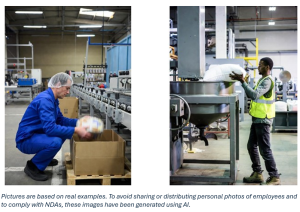
Physically, these assumptions quickly become costly. Expecting a packer on a confectionery line to squat 1,500 times a shift (3 squats per minute) to load boxes isn’t just uncomfortable; it risks repetitive strain injuries and slows throughput as fatigue sets in. Similarly, manual lifting on a produce line can add up to tens of thousands of pounds per shift, far exceeding ergonomic guidelines and increasing the risk of injuries.
Cognitively, the pattern is similar. When a dairy operator is asked to monitor multiple temperature zones, SKUs and quality checks at once, focus doesn’t improve; it fractures. Mental overload reduces decisions and consistency, resulting in overlooked spoilage risks or batch errors. What looks like idle time is often essential recalibration, the invisible buffer that keeps quality and flow stable.

Instead of filling every second, design work around human capacity from the start. Adjust station heights to minimize bending and use automated assists for heavy lifts to reduce repetitive motion and limit simultaneous decision variables to three or fewer per role. Through our projects, this balance has cut error rates by up to 30% while improving safety, morale, and reliability.
True optimization isn’t about eliminating idle time; it’s about building recovery into the rhythm of work. When tasks align with human limits, plants gain steadier performance and more resilient operations.
Misconception 2: “Procedures guarantee performance.”
Once tasks are designed with human limits in mind, standardization becomes the next priority. However, this is where many plants falter, mistaking the presence of documentation for true process control. The assumption goes: if we have procedures, we’re covered. In practice, these documents often contain vague language, missing steps, dense text or missing targets.
Consider a nut-processing line: An imprecise “sanitize equipment as needed.” One shift performs a quick wipe; another conducts a full scrub. The inconsistency risks allergen contamination, often unnoticed until an audit or customer complaint. Similarly, in a bakery we reviewed, an unclear changeover guide left a new operator waiting hours for direction on swapping dies and recalibrating scales, halting production across shifts.
Another common flaw is the absence of measurable expectations. Procedures describe what to do but not how long it should take. Without defined time targets, efficiency becomes subjective. We’ve seen packing times vary by 35% simply because no baseline existed. The same issue plagues changeovers, assumed to be a two-hour task but often achievable in 18 minutes when clear steps and benchmarks are in place. Inconsistent timing, sometimes varying by 40%, leads to wasted capacity and unnecessary overtime.
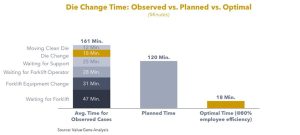
True optimization requires turning procedures into performance tools. That means pairing them with time-based benchmarks derived from data-driven time studies, ensuring expectations are both realistic and traceable.
To elevate SOPs, layer it for different audiences:
• A concise version for managers to track cycle times and deviations.
• A visual operator guide with photos or diagrams for setup and inspection steps.
• A video-based version for onboarding and skill transfer

In our engagements, this structured approach consistently transforms procedures from passive references into active enablers of performance.
Misconception 3: “Our work instructions from 3 years ago are still adequate, things haven’t changed significantly.”
Managers frequently underestimate how quickly operations evolve, convinced that long-standing work instructions remain relevant. However, products evolve, recipes adjust for new ingredients or consumer trends, equipment receives upgrades for efficiency, and regulations tighten, yet the SOPs linger unchanged, often tucked away in forgotten binders or outdated digital folders. The result is a widening gap between what’s written and what’s done on the floor, forcing operators to improvise and quietly eroding process reliability in a highly regulated environment.
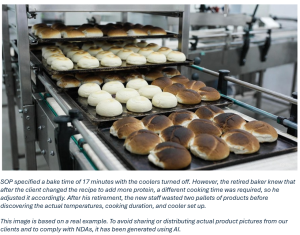
At one processing plant we supported, the mixing instructions, written a decade earlier still said “blend to required consistency.” without accounting for any recent equipment retrofit that altered agitator speeds. One team mixed slowly to avoid clumping, another pushed aggressively for speed, resulting in inconsistent product quality. Outdated SOPs also magnifies the loss of institutional knowledge. When experienced supervisors retire, their unwritten methods for handling ingredient variations disappear with them, leaving newer teams to relearn through trial and error.
The solution isn’t occasional revision, it’s continuous regeneration. Leverage digital platforms and AI-driven software to analyze current workflows, incorporate changes like recipe modifications or regulatory tweaks, and regenerate instructions in as little as 15 minutes, complete with refreshed visuals, precise time benchmarks (derived from software time studies), and layered formats for different users.
In one high-SKU snack plant, we implemented this approach: AI reviewed video of optimal runs to define data-backed cycle times and auto-updated guides accordingly. Within weeks, product consistency improved dramatically, cutting waste from off-spec batches by 25%. Fewer loads required rework, schedules stabilized, and less product was discarded, proof that current instructions don’t just document operations; they drive them.
Misconception 4: “Digital tools are too hard to implement in the short term and won’t integrate with our legacy systems.”
With robust, up-to-date procedures in place, accessibility and data-driven insights become essential. Yet many executives often deprioritize digital tools, assuming they require significant time and effort and clashes with aging infrastructure in established plants.
Digital adoption doesn’t mean ripping out legacy systems or breaking the bank. The best path forward begins with targeted pilots. For guideline management, rugged tablets offer interactive and searchable SOPs with embedded videos and real-time updates. They connect over simple Wi-Fi and leave core machinery untouched. Initial setups can cost just a few thousand dollars and often deliver ROI within weeks from 25% quicker changeovers or 15% error drops. As teams grow comfortable, these tools evolve from access points into lightweight workflow engines. They deliver tailored instructions, verify task completion through quick check-ins, and surface real-time performance signals such as time targets or flagged deviations.
The same logic applies to data collection. Firms often hesitate because they picture costly sensor arrays, yet most operations only need a few data streams to unlock meaningful insight. Starting with three or four high-value variables such as line speed, temperature, and yield is enough. Affordable off-the-shelf sensors, often totaling less than five hundred dollars, can plug into existing PLCs or basic IoT hubs. Even this minimal instrumentation can reveal issues that manual tracking hides. In one case, a simple setup uncovered a 40% variance in mixing times.

In a multi-line facility we supported, leaders worried that adding technology to 20-year-old conveyors would create chaos. Instead, a one-month pilot digitized guidelines using tablets with QR-linked demos and color-coded targets and added four low-cost sensors for core metrics. Onboarding time fell by 60 percent, errors dropped by 22 percent. Gradual scaling allowed the digital layer to blend seamlessly with legacy equipment and demonstrated that technology enhances rather than replaces.
Clinging to the belief that digital tools are “too expensive” or “won’t fit” keeps processes siloed and data blind. Incremental steps in accessibility and analysis unlock efficiencies that turn long-standing legacy systems into competitive advantages.
Misconception 5: “Our employees just don’t like work and don’t care about performance issues, we just need more training or stricter discipline.”
Even with accessible, digital-backed procedures, processes only thrive when people embrace them. Yet managers often default to blaming workers for shortcuts or treating every issue as human error, fixable with more training or tougher rules. This overlooks the deeper behavioral and perceptual gaps that drive non-adherence, such as unclear rationales behind steps, overly complex instructions, or resistance rooted in the belief that personal tweaks are “faster” or “better”. This blame game not only erodes morale but perpetuates issues. For example, an operator who skips a sanitation check may not be careless at all but simply avoiding a convoluted twelve-step protocol that is nearly impossible to follow mid-shift, creating residue buildup and potential FSMA scrutiny.
We’ve encountered this in a blending line audit: Supervisors pointed out “unmotivated” staff for 30% output variances, advocating for tougher oversight. The true issue was an instruction set packed with dense paragraphs and multiple variable ingredient ratios, speed settings, safety checks without sequencing or visuals. Operators were overwhelmed and hesitant, slowing batches as they second-guessed each step.
In another mixing station case, “performance faults” triggered retraining pushes, yet the issue stemmed from a task exceeding ergonomic limits: Requiring repeated overhead reaches for heavy additive bags (cumulatively over 50 pounds per motion), prompting resistance through shortcuts that fatigued workers and compromised mix uniformity.
Drawing from industrial psychology insights like the Hawthorne studies, where productivity rose not from environmental changes but from workers’ feeling valued through attention, this misconception misses genuine engagement shifts mindsets. Instead of punishment, foster buy-in through open dialogues, explaining why each step matters, demonstrating the impact of deviations, and involving teams in refining workflows creates ownership.
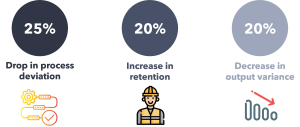
Across our engagements, applying this approach in a high-volume plant delivered quick wins: deviations dropped 25 percent, retention improved, and the “lazy” narrative disappeared as teams took ownership of streamlined processes. Rather than blaming individuals, the teams acknowledge that most inconsistencies originate in system design, not character.
Misconception 6: “Downtime is inevitable in operations, equipment fails and people make mistakes, so it’s unavoidable.”
In the nonstop pace of food manufacturing, leaders often accept downtime as an unavoidable cost, chalking it up to random breakdowns or human slips. This passive acceptance ignores that much of it stems from preventable root causes, like inadequate maintenance protocols, unaddressed process flaws, or overlooked training gaps. These small cracks quickly escalate into hours of lost production, spoiled batches, and shrinking margins.
We see this pattern across plants. In a packaging line, changeover delays commonly blamed on operator errors were the result of unclear procedures. Ambiguous guides left employees guessing about steps, turning short pauses into long standstills while they waited for assistance.
What is often labeled “equipment failure” can also mask systemic issues. A conveyor belt incident attributed to mechanical breakdown was ultimately traced to improper storage during a rushed cleanup. The error came from unclear instructions and poor shift handoffs, not from the machine itself.
Reducing downtime requires replacing resignation with proactive rigor. Root-cause tools can expose patterns, such as stoppages tied to certain shifts or SKUs. Adding preventive measures such as scheduled audits, early-warning sensor alerts, and consistent cross-training builds resilience. This turns “unavoidable” into actionable, with quick-response drills ensuring teams address issues in minutes, not hours.
In our projects, this approach has slashed downtime dramatically: In one case, we simply defined which workers have the key skills (e.g., changeover expertise or sanitization protocols) and rearranged schedules for a handful of them to ensure coverage across shifts, guaranteeing someone knowledgeable was always on-site. That alone decreased unplanned stops by 30%.
Downtime is not destiny. Treat it as a solvable operational challenge rather than an unavoidable burden, and those interruptions become rare exceptions that strengthen reliability across the entire operation.
Authors

Ozan Ozaskinli
Partner and Managing Director
Ozan.Ozaskinli@valuegeneconsulting.com

Jordy Lemus
Implementation Manager
Jordy.Lemus@valuegeneconsulting.com

Sercan Aldatmaz
Principal
Sercan.Aldatmaz@valuegeneconsulting.com